Sativa Landrace/Heirloom
Moderately Low THC (14% – 18%)
Flower
At the outset of this mission to write a review every day of April in honor of 420 – the most sacred of weed holidays – I had intended to write shorter reviews, keeping them more digestible and limiting myself to a more manageable workload. It’s actually been more work for me trying to write things that are short and to the point. I could just drop the keyword terms in a list and be done with it, but that does both an injustice to the peculiarities of each strain and to my overall intention for this blog, which is to truly be engaging with the product and other consumers. I like that many of the reviews so far this month have given me opportunities to drop in some extra little bit of information about cannabis that maybe doesn’t need its own article from me, but that is good information for my audience.
Gather round, make yourselves comfortable, and let’s talk about some of the more common terms for the genetics of cannabis strains. Like my review of Peach Rings Rosin, I’m going to drop some terms in a list form, ironically the opposite of what I said I liked to do for reviews just a moment ago, but with some definitions. Then we’ll get to Acapulco Gold.
Strain: This is the most common term used for different varieties of cannabis. I like to think of this as surnames, as each individual cultivation (grow) of strain differs a bit, depending on any number of environmental factors.
Cultivar: This is the more accurate term for strain. Strain – in the most technical sense – refers to genetically distinct microorganisms, like bacteria or viruses. Cultivar is a portmanteau of “cultivate” and “variety.” So while I personally prefer to use the term cultivar, I still use strain quite a bit, as it’s the far more common term used.
Variety: Some people just use the word variety in place of strain or cultivar, but that could be wild or cultivated, so as we are typically talking about varieties that have been intentionally cultivated, I don’t tend to use this one unless I’m in real need of variation in my vocabulary when I’m writing.
Landrace: This is where the term variety comes into play a little more, as landrace strains are those that have not been hybridized by humans. These are the wild strains, the original strains, the cannabis as mother nature intended. Though, nowadays, they’ve been cultivated with intention. They just haven’t had their genetics crossed with other varieties of cannabis. This is why so many are named after the place where they originally grew wild. Some of the most famous landrace strains are Columbian (Red), Thai, Afghanistan (Afghan Kush), Hindu Kush, Lamb’s Bread, Durban Poison, Malawi (Gold) and yes, Acapulco Gold.
Heirloom: This is a massively under-used term that typically refers to landrace strains that have been cultivated away from their native region, but are still not crossed or hybridized with other strains. Technically speaking, by this definition, the Acapulco Gold that I’ll be reviewing below could be considered an heirloom and not a landrace, as it was cultivated here in Maine, not in Acapulco, Mexico.
Hybrid: While so much emphasis has been placed on indica, sativa, and hybrid as terms for broad categories of cannabis, technically every variety of cannabis that isn’t a pure landrace or heirloom is a hybrid, or a cross of two or more varieties of cannabis. More colloquially, when people say “hybrid” it means they’re looking for a cultivar that has an even balance between sativa and indica qualities.
Sativa/Indica/Ruderalis: It’s easiest to define these all together. These are the three species of cannabis. While it has been assumed for a long time that sativa are headier and energizing and indica are either more sedative or impart a stronger body high, these are more stereotypes, and not the reason for different strains having different effects. The major difference is that sativa tend to grow tall with narrower leaves, and indica grow shorter and bushier. Ruderalis isn’t cultivated for getting high, as they naturally have very, very low THC, but they are used in breeding other varieties as they’re qualities can change the flowering periods of other cannabis plants.

There are so many more layers to all this as well, but most of that only really matters to the people actually cultivating cannabis. If you’re interested in that level of knowledge, my favorite local and accessible source of deep cannabis genetics knowledge is Seed & Soil. They’re wonderful people with tons of knowledge and enthusiasm for sharing that knowledge.
So, here we are, finally: Acapulco Gold, a landrace (or heirloom) strain that is one of my absolute favorites. I even researched its full terpene profile for my homemade beard oil, I like it that much. For some fascinating introductory reading about the history and cultural significance of Acapulco Gold, I recommend starting with – of all things – its Wikipedia entry. One specific point from the article that I think is worth noting is that Acapulco Gold was considered one of the strongest strains of cannabis available in the 60’s and 70’s… at a staggering… 23% THC, a number that doesn’t really turn many heads nowadays.
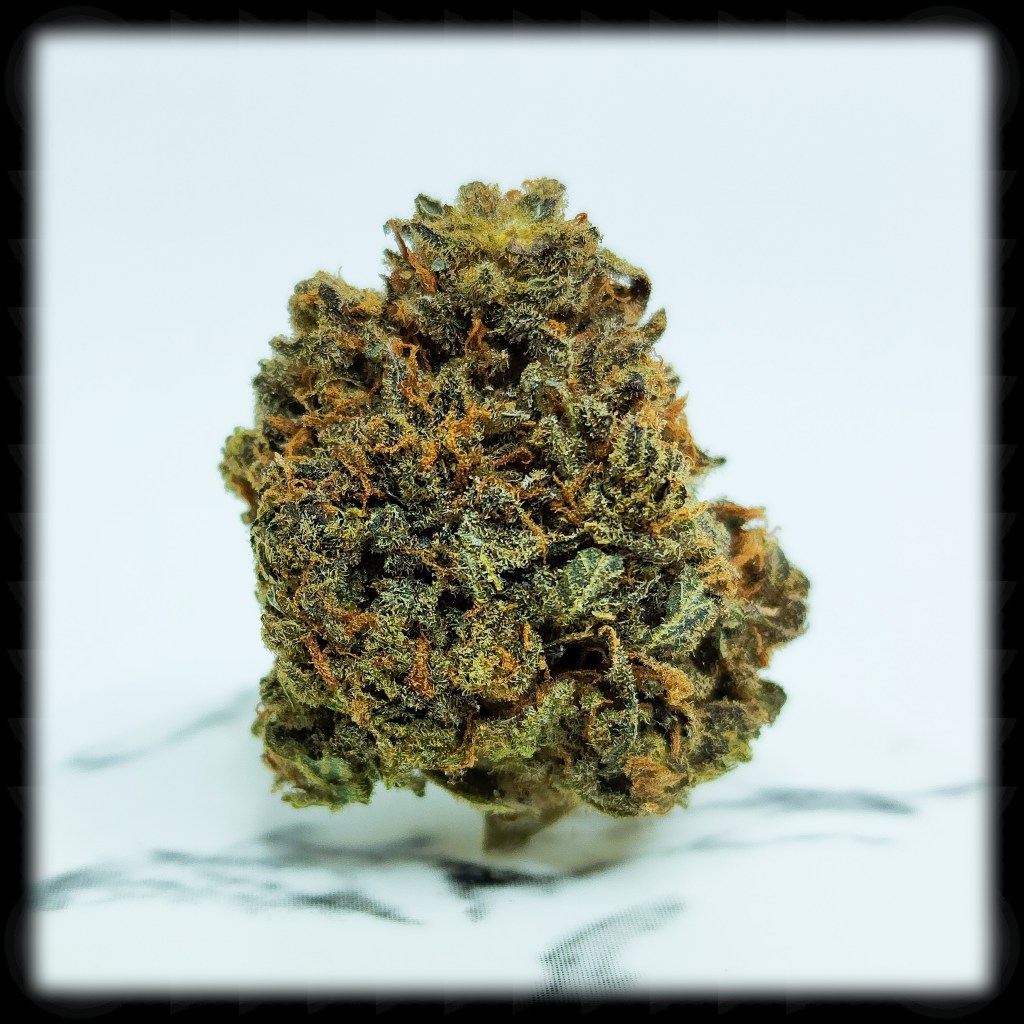
So, what about the Acapulco Gold that I’ve had here in Maine? The nugs are a deep green and orange, giving a hint of the classic golden color from which its name derived (when not over-lit in a homemade lightbox for the photo in this post). Its texture is firm but springy, not too sticky and not too dry, again a testament to a good curing process. The bud smells like coffee, toffee, and honey. It is one of the most delightful and inviting cannabis aromas I’ve ever come across. The smoke is relatively average, a sort of extra medium if you will, thick enough to really fill the lungs and carry the flavor, but not harsh even in pre-rolled joints.
The high is somewhat less than the legends tell, but then again, the legends also claim that the only way to get the truest and most potent form of this variety of cannabis is to be grown and cured in the Acapulco region’s sun and wind, so I’ll cut Divine Buds some slack here, since Maine is most certainly not Mexico (except for Mexico, Maine, which I do not think counts). That being said, I don’t wish to lower expectations for the quality of the high. It’s no Cheech and Chong weed, but it’s really nice. There are very few highs as happy as this one. It’s high is a carefree lightness, calming my nerves while not carrying over to a heavy body high. I know I say this a lot (because I don’t have the desire to review strains I don’t like), but go get this one, because I highly recommend it.
Notes
Context
Afternoon
Evening
Social
Solo
At Home
Appearance
Medium Green
Orange Hairs
Frosty
Medium Nugs
Texture
Dry
Sticky
Soft
Aroma
Coffee
Toffee
Honey
Flavors
Coffee
Toffee
Bitter
Smoke
Clean
Medium
Smooth
Head High
Uplifted
Euphoric
Social
Other Effects
Anxiety Reduction
Calm
 Stoned Coast